After the workshop, we sat in a small café, hearts light and open, talking about everything and nothing. Painting ceilings, work, yoga, art, health. Then someone asked “What are you doing today?” and the conversation turned to something we all knew too well: procrastination.
We laughed about how we postpone tiny tasks that would take five minutes, how they linger in the back of our minds for weeks. Why do we do that? I even asked Google.
“Essentially, it's a way to prioritize immediate comfort over long-term consequences.”
Exactly. The irony is that delaying only makes me feel worse, yet I still do it. It’s a loop. One of avoidance, discomfort, and self-criticism.
Reading about it brought Ram Dass to mind. In yoga philosophy, there’s a powerful concept that offers an antidote to procrastination: tapas.
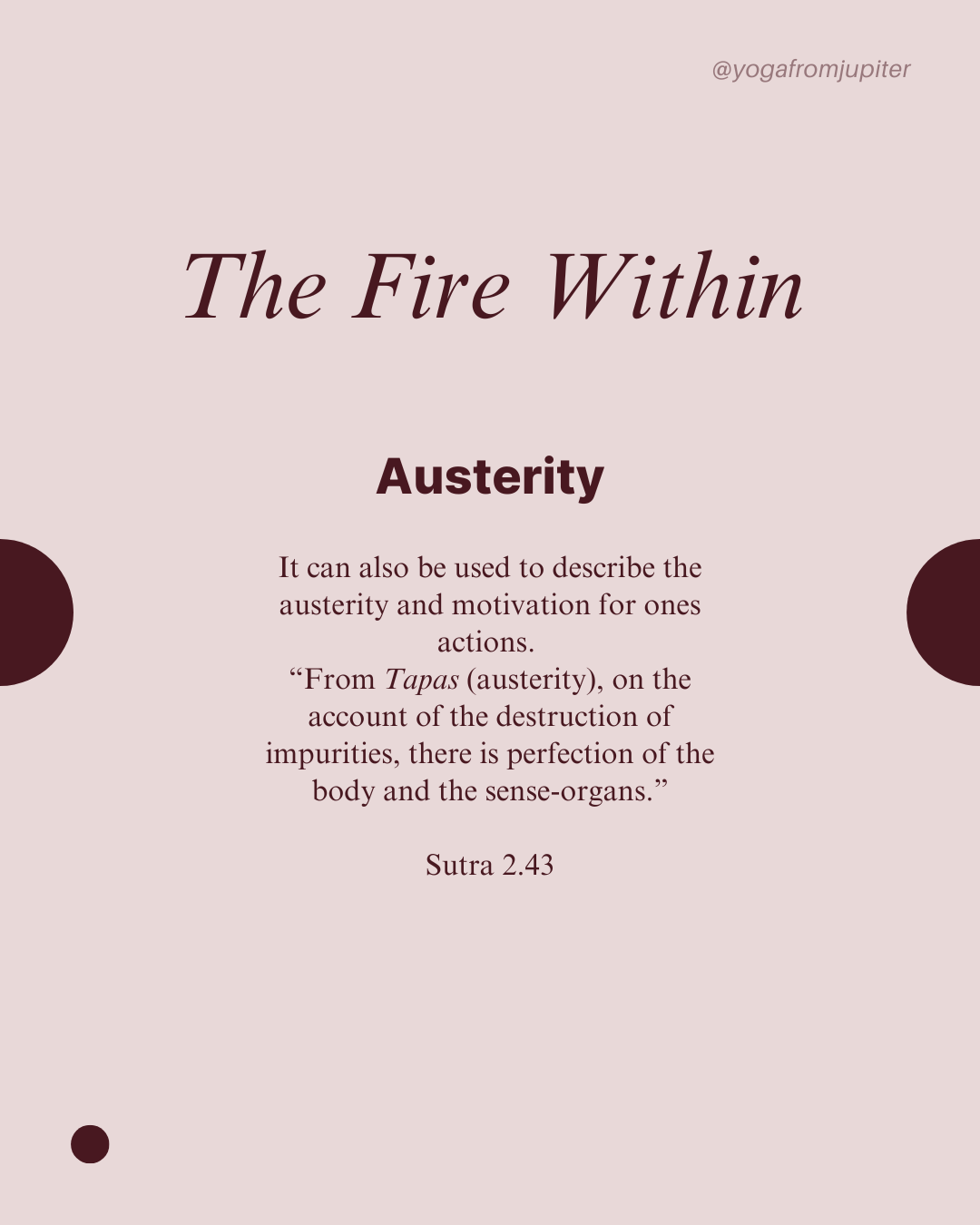
In Sanskrit, tapa means “to burn,” “to heat,” or “to cook.” Tapas is the inner fire that burns away impurities and patterns that no longer serve us. It’s the discipline that transforms effort into growth, the energy that keeps us showing up even when we’d rather not.
Ram Dass described tapasya as “purification through self-discipline” a gradual process of confronting and loosening the hold of desires and attachments. Each time we resist the urge to give in to comfort, to delay, to scroll, to avoid, we add a small piece of wood to that inner fire.
But here’s the important bit: discipline in yoga is born from love, not force.
It’s not about punishing ourselves or pushing too hard. It’s about caring enough to show up for ourselves.
When I first began practicing yoga, this was what fascinated me most. No matter how I felt, I would step onto the mat. Maybe not for an hour, but at least for ten minutes. Because some practice is always better than none. Over time, that small commitment built an inner strength that extended far beyond my yoga mat.
Practice becomes tapasya when we do it with awareness and compassion. It’s how yoga helps us procrastinate less: by training us to stay present, to focus, to listen. Through asana, breath, and stillness, we learn that transformation doesn’t come from intensity, but from consistency.
And consistency doesn’t happen overnight.
Tapas is a slow burn. A fire that strengthens as we feed it gently, one honest effort at a time.
As Ram Dass said, “As many times as you trip and fall… just get up.”
If you fall a thousand times, get up a thousand and one.
That’s the practice.
That’s the fire.
And maybe, that’s all we really need.
SOURCES:
https://www.pranawakening.com/post/tapas
https://kramayoga.com.au/the-fire-within/?srsltid=AfmBOooDuA1SFFU7-UcJBSt7-Lj_aajsjRwUppmCHfWQQsydVbsxBLyJ
https://www.yogabasics.com/learn/tapas-yogic-will-power
https://www.yogapedia.com/definition/6638/tapasya
https://www.yogaeasy.com/artikel/understanding-the-niyamas-tapas
https://kriyayogajagat.com/what-is-tapah-a-proper-understanding-of-the-bhagavad-gita-part-126
Translation of the Sutra: https://vallartabreezeyogapuertovallartayogastudio.com/yoga-sutra-2-43-kayendriyasiddhirasuddhiksayattapasah